
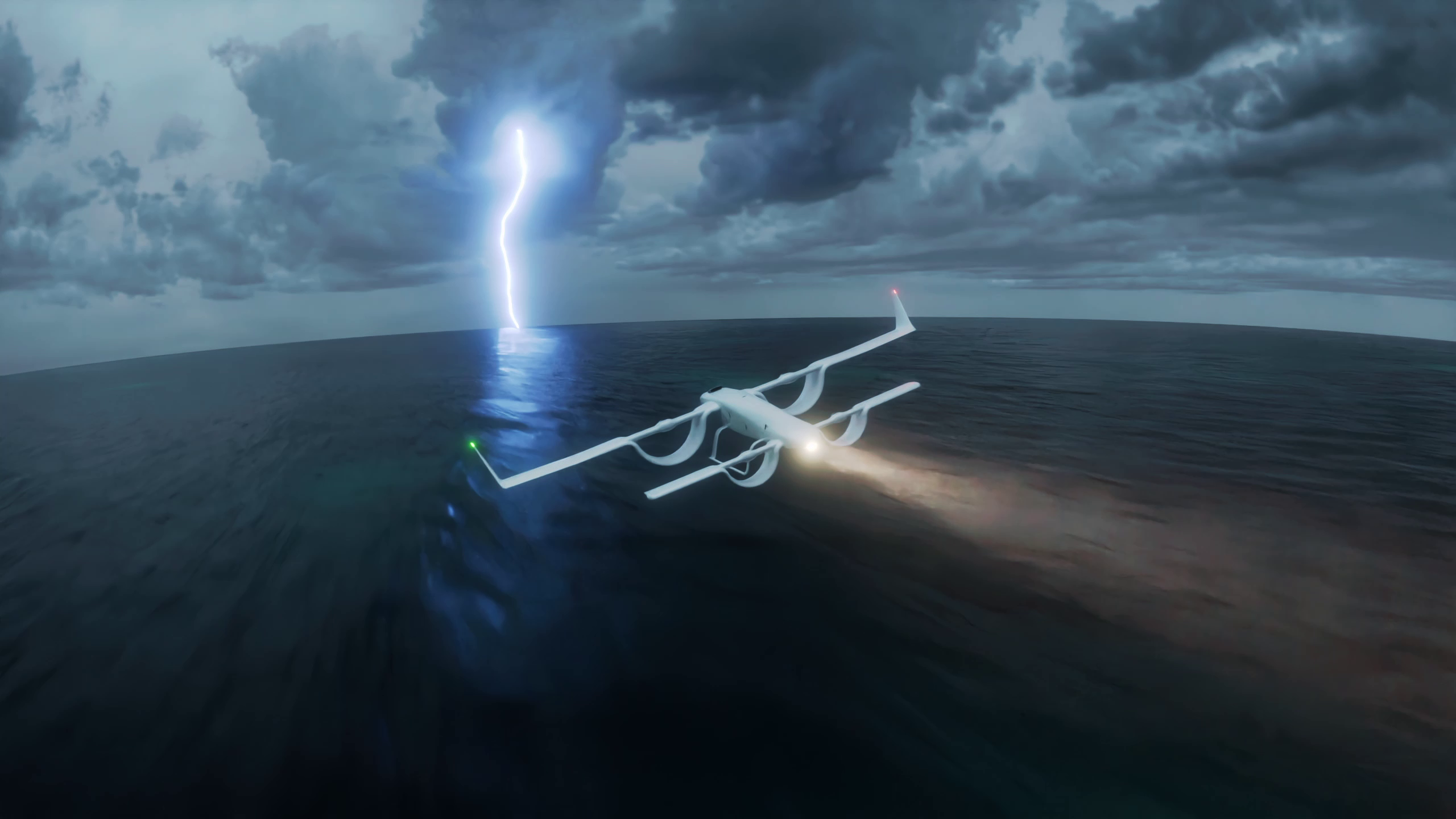
HopFlyt hybrid-electric aircraft in flight

Reach without runways.

Our mission

Built for Today’s Missions. Ready for Tomorrow’s Possibilities.

HopFlyt develops long-endurance, hybrid-electric Vertical Takeoff and Landing (VTOL) aircraft designed to enable advanced capabilities and adapt to evolving mission needs. Our mission is to give operators the reach, versatility, and runway independence to accomplish more today while laying the foundation for the future of advanced air mobility.

Our aircraft

Our Aircraft

Explore our Aircraft
The platform behind the mission

HopFlyt’s family of next-generation UAS combines our patented channel-wing propulsion system with hybrid-electric power. Built around a common architecture, these platforms deliver scalable capabilities and runway-independent launch and recovery, giving operators the flexibility to choose the aircraft best suited to their mission.

Top view of the HopFlyt Squall tactical hybrid-electric VTOL aircraft

Squall

Squall is a tactical Group 3 hybrid-electric VTOL UAS. Equipped with a self-starting hybrid generator, Squall is designed to provide up to 12 hours of fixed-wing endurance without the need to swap batteries between flights. The large internal payload bay allows the aircraft to carry up to 20 lb of cargo, downward-facing sensors, or other special-mission packages.

Top view of the HopFlyt Cyclone-M long-endurance hybrid-electric VTOL aircraft

Cyclone

Cyclone-M represents the future of Group 3 UAS. Designed to democratize capabilities normally reserved for much larger platforms, Cyclone-M combines runway-independent launch and recovery, heavy-fuel hybrid power, ultra-long-endurance fixed-wing cruise, and a large modular payload system to enable advanced operations in contested domains. Equipped with a heavy-fuel hybrid-electric powerplant, Cyclone-M supports distributed and maritime operations with common fuel sources—no special infrastructure required.

01Squall - Tactical Group 3 UAS

Applications

Applications

One Platform. Many Missions.

Across defense and industry, modern distributed operations require persistent capabilities over wide areas, often far from runways and established infrastructure. HopFlyt’s autonomous air platforms can extend reach across four core mission areas.

Sense

Collect persistent intelligence through surveillance, detection, mapping, and imaging payloads.

Connect

Extend communications and command networks across dispersed teams and remote environments.

Influence

Carry electronic warfare, spectrum, computing, and other payloads that shape the operating environment.

Deliver

Move cargo, medical supplies, equipment, or ordnance directly to the point of need.

Our technology

Our Technology

Versatility by design

HopFlyt integrates patented propulsion, hybrid-electric power, autonomous flight controls, and configurable payload architecture into one runway-independent platform.

Channel-wing propulsion

Independently tilting channel wings augment lift in hover, transition into efficient wing-borne flight, and maintain control across the flight envelope.

Hybrid-electric endurance

An onboard generator charges batteries in flight, enabling long endurance without battery swaps or specialized charging infrastructure.

Runway-independent design

Vertical takeoff and landing, large internal payload volume, and modular systems support operations from ships, austere locations, and distributed teams.

Top-down technical cutaway of HopFlyt’s hybrid-electric aircraft architecture
01Integrated hybrid-electric architecture

Built by the team

The future of aviation is taking flight.

Meet the people rethinking vertical aviation—and tell us where the mission needs to go next.

Learn moreGet in touch
Back to top